Campus Bike Share Program Software for Universities & Colleges
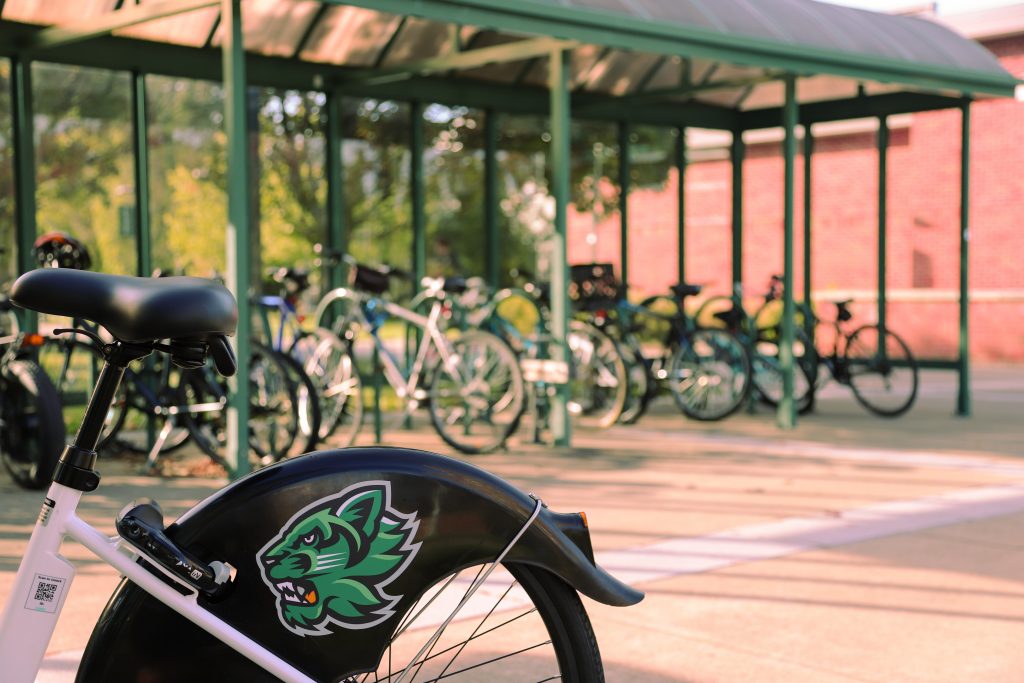
Many campuses span hundreds of acres. A ten-minute walk between the engineering quad and a residence hall becomes a three-minute ride. Bike share closes the last-mile gap that shuttle routes cannot efficiently cover, reducing tardiness and improving access to campus resources across the entire footprint.
Koloni Fleet by Accessa is a complete campus bike share platform purpose-built for higher education. Deploy GPS-tracked bikes with smart locks at key locations, manage everything from a single fleet dashboard, and pay roughly one-fifth the cost of traditional kiosk-based systems. No docking stations. No expensive infrastructure. Just geofenced parking zones, smart locks, and a student app that works.
Why Campus Bike Share Programs Are Growing
University transportation directors and sustainability officers face converging pressures that make campus bike share one of the highest-ROI investments available.
Parking Infrastructure Has Hit Its Limit
A single surface parking space costs a university $5,000–$10,000 to build. A structured garage space can exceed $30,000. Yet most campuses still have waitlists. Every student who rides instead of drives frees a parking spot without breaking ground on new construction.
Sustainability Commitments Demand Measurable Action
More than 700 colleges have signed the Presidents' Climate Commitment or set net-zero targets. Transportation typically accounts for 30–40% of a campus carbon footprint. A well-run college bike sharing system delivers quantifiable CO2 reductions — the kind of data that appears in AASHE STARS reports, ACUPCC submissions, and grant applications.
Students Expect Micromobility
Today's students arrive on campus already familiar with shared bikes and scooters from their home cities. A campus bike share program is not a perk — it is expected infrastructure, on par with campus Wi-Fi and shuttle routes.
The Last-Mile Problem Is Real
Many campuses span hundreds of acres. A ten-minute walk between the engineering quad and a residence hall becomes a three-minute ride. Bike share closes the last-mile gap that shuttle routes cannot efficiently cover, reducing tardiness and improving access to campus resources across the entire footprint.
Challenges Holding Campus Bike Share Programs Back
The case for campus bike share is clear. The operational execution is where most programs stall.
Theft and Unauthorized Use
Open bike racks and cable locks invite theft. Without GPS tracking and authenticated access, shrinkage rates can make a program financially unsustainable within a single academic year. Universities need a system that ties every ride to a verified account and tracks every bike in real time.
Tracking Utilization for Grants and Reporting
Federal and state transportation grants — along with sustainability reports and board presentations — require hard data: rides completed, miles ridden, emissions avoided, unique riders served. Manual counts and spreadsheet tracking cannot meet these requirements reliably.
Seasonal Demand Swings
A fleet sized for 15,000 fall-semester students is overbuilt during summer sessions with 3,000 enrollees. Programs that cannot scale up and down waste budget on idle assets and unnecessary maintenance cycles.
Budget Constraints
Traditional bike share systems with fixed docking stations cost $4,000–$5,000 per bike to deploy. At that price, most mid-size universities can only afford a token fleet too small to shift transportation behavior. The infrastructure cost alone kills many programs at the budget approval stage.
How Koloni Fleet Solves It
Koloni Fleet replaces docking stations, manual logs, and fragmented tools with a single university bike share software platform that covers every aspect of a campus program.
Geofenced Campus Boundaries
Define your campus perimeter as a geofence. If a bike approaches the boundary, the rider receives an alert. If it crosses, your operations team is notified instantly with the bike's live GPS coordinates. Bikes stay on campus — period.
Designated Parking Zones, No Docks Required
Set geofenced parking zones at residence halls, academic buildings, student unions, recreation centers, and transit hubs. Riders are guided to end their trip inside a designated zone. Because there is no physical dock infrastructure, you can add, move, or remove parking zones in minutes as campus needs change. This flexibility is what drives total deployment costs to roughly one-fifth of traditional kiosk systems.
Smart Locks and Student App
Each bike is equipped with a Bluetooth-enabled smart lock. Students and staff download the Koloni rider app, authenticate with their campus credentials, and unlock a bike in seconds. No separate accounts, no credit card required for students whose rides are covered by fees. The app shows real-time bike availability and parking zone locations across campus.
Speed Zone Management
Define pedestrian-heavy areas — quads, crosswalks, building entrances — as speed zones. The system automatically enforces reduced speeds when a rider enters these areas, improving safety for pedestrians and cyclists alike without manual enforcement.
Fleet Dashboard for Full Visibility
Your transportation or sustainability office gets a web-based dashboard showing every bike in real time: location, ride status, and maintenance condition. Filter by zone, time of day, or rider segment to understand usage patterns and make data-driven decisions about fleet size and placement.
Sustainability Data, Ready to Report
Koloni Fleet automatically calculates rides completed, miles ridden, and estimated CO2 avoided. Export this data directly into AASHE STARS reports, ACUPCC submissions, or grant applications. No manual tallying required — every ride is recorded and attributed.
Pricing at a Fraction of Kiosk Systems
Because Koloni Fleet uses geofenced parking zones instead of fixed docking stations, total deployment cost is roughly 80% lower than traditional bike share infrastructure. That means a meaningful fleet — not a token pilot — is within reach for institutions of every size and budget.
Key Features for Higher Education
Koloni Fleet includes capabilities designed specifically for the operational environment of universities and colleges.
Feature
What It Does for Your Campus
Campus Geofencing - Keeps bikes within defined boundaries; triggers real-time alerts if a bike leaves campus
Parking Zone Enforcement - Geofenced drop-off zones eliminate bike clutter and ensure bikes are parked at approved locations
Student ID Integration - Riders authenticate with existing campus credentials — no separate account creation required
Speed Zone Management - Automatically enforce reduced speeds in pedestrian-heavy areas like quads, crosswalks, and building entrances
Seasonal Fleet Scaling - Reduce active fleet during summer and breaks; scale back up for fall and spring semesters
Sustainability Reporting - Automated tracking of rides, miles, and CO2 savings for STARS, ACUPCC, and grant reports
GPS Theft Prevention - Real-time location tracking for every bike with instant alerts for unauthorized movement
Maintenance Alerts - Proactive notifications when a bike needs service, keeping your fleet reliable and minimizing downtime
Flexible Payment Models - Support student-fee inclusion, per-ride pricing, or semester subscriptions — or any combination
Fleet Dashboard
Single pane of glass for your operations team to monitor, manage, and report on the entire program
Implementation Timeline
Koloni Fleet is designed for fast deployment. Most campus programs go from signed agreement to riders on bikes in 30–60 days.
Weeks 1–2: Planning and Configuration. Define campus geofence boundaries, parking zones, and speed zones. Configure student credential integration with your campus identity provider. Set payment model and pricing tiers.
Weeks 3–4: Fleet Preparation. Bikes are outfitted with smart locks and GPS units. Fleet is tested and staged for deployment. Rider app is customized with campus branding and zone maps.
Weeks 5–6: Soft Launch. Deploy bikes to initial parking zones. Run a pilot with a targeted rider group — often campus staff or a single residence hall — to validate zone placement and app experience.
Weeks 6–8: Full Campus Launch. Open the program campus-wide. Promote through orientation, campus communications, and sustainability office channels. Monitor the fleet dashboard and adjust zone placement based on early utilization data.
Most institutions launch at the start of a fall or spring semester for maximum visibility and are fully operational within a single academic term.
ROI: What Universities Can Expect
A campus bike share program powered by Koloni Fleet delivers returns across multiple budget lines and institutional priorities.
Parking cost avoidance. Every regular bike commuter represents one fewer car competing for limited parking. Deferring even a single parking structure expansion can save millions in capital expenditure. At $5,000–$30,000 per space, even modest mode shift produces significant savings.
Grant eligibility. Automated utilization and emissions data strengthens applications for federal, state, and foundation transportation grants. The reporting tools in Koloni Fleet produce exactly the data these applications require.
Measurable sustainability progress. Ride data translates directly into CO2 reduction figures for climate action plans. Programs with documented impact strengthen AASHE STARS submissions and ACUPCC reporting.
Student recruitment and retention. A visible, well-run bike share program signals a modern, sustainability-minded campus — a factor that increasingly influences prospective student decisions. Transportation consistently appears in student satisfaction surveys as a pain point, and convenient bike access addresses it directly.
Reduced shuttle costs. Bike share absorbs short trips that would otherwise require shuttle frequency increases as campus enrollment grows.
Operational simplicity. Automated access, remote fleet monitoring, and proactive maintenance alerts reduce staffing burden compared to manually managed programs. Your team manages the fleet from a dashboard, not from a bike rack.
Most campuses see full payback within 12–18 months when factoring parking cost avoidance and grant funding alone.
Launch Your Campus Bike Share Program
Your students are asking for sustainable transportation. Your climate plan demands measurable progress. Your parking system needs relief. Koloni Fleet brings all of these priorities together in a single platform that deploys in weeks, not years.