How to Start a Bike Share Program: The Complete 2026 Guide
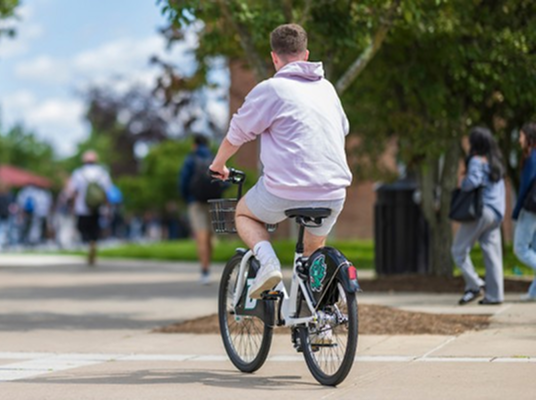
The key is matching the right model and technology to your specific context. A 200-unit apartment community has fundamentally different needs than a mid-size city, and the platform you choose should reflect that.
Bike share programs are no longer limited to major cities with million-dollar budgets. In 2026, modern fleet management software, smart bike locks, and geofencing technology have made it possible for apartment communities, university campuses, hotels, and mid-size municipalities to launch professional bike share programs at a fraction of the traditional cost.
The global micromobility market is projected to reach $8.8 billion in 2026 and is growing at 10.6% annually. Whether you want to add a resident amenity, reduce campus parking demand, or launch a public transit alternative, this guide walks you through everything you need to know.
Why Start a Bike Share Program
The market opportunity
Bike share has moved well beyond a novelty. Property managers use it to increase NOI and differentiate their communities. Universities deploy it to solve last-mile transportation and hit sustainability targets. Cities launch programs to reduce congestion and emissions. Hotels offer it as a premium guest experience.
The economics have shifted dramatically. Traditional station-based bike share systems required $4,000 to $6,000 per bike in infrastructure costs — docking stations, kiosks, concrete pads, electrical hookups. Modern dockless systems with smart locks and geofenced parking zones have dropped that cost by 80% or more.
Sustainability and demand
Residents, students, and guests increasingly expect sustainable mobility options. A well-run bike share program reduces car trips, cuts carbon emissions, and provides a tangible sustainability story. For universities pursuing STARS certification or properties marketing to environmentally conscious tenants, bike share is one of the most visible and measurable sustainability investments available.
Revenue potential
Bike share programs generate revenue through per-ride fees, subscription memberships, or bundled amenity charges. A fleet of 20 bikes at a multifamily property can generate $3,000 to $6,000 per month in rider fees, while simultaneously supporting a $25 to $50 per-unit amenity premium on rent.
Types of Bike Share Models
Understanding the three primary models will help you choose the right approach for your program.
Station-based (docked)
Bikes are locked into fixed docking stations. Riders pick up at one station and return to any other station. This model requires significant infrastructure — each station costs $40,000 to $60,000 to install. Best suited for large municipal programs with dedicated capital budgets. Examples include Citi Bike (New York) and Divvy (Chicago).
Free-floating (dockless)
Bikes can be picked up and dropped off anywhere within a service area. Earlier dockless programs struggled with bikes scattered randomly across cities, creating clutter and public backlash. This model has largely evolved into the geofenced approach below.
Geofenced smart-lock (the modern approach)
This is where the industry has landed in 2026. Bikes are equipped with smart locks that riders unlock via a mobile app. Geofencing technology defines the service area, designated parking zones, no-go zones, and even speed-limit zones — all configurable from a software dashboard.
No docking stations required. Riders must park in designated geofenced zones (at buildings, transit hubs, trailheads) or face penalties. This gives you the flexibility of dockless with the orderliness of stations, at a fraction of the infrastructure cost.
This is the model used by platforms like Koloni Fleet by Accessa, and it is the focus of this guide.
Planning Your Bike Share Program
Step 1: Define your goals and audience
Before selecting bikes or software, clarify what you are trying to accomplish. A multifamily property adding a resident amenity has different requirements than a city launching a public transit alternative.
Key questions to answer: Who will ride? (residents, students, guests, general public) What trips are you replacing? (car commutes, campus walks, recreational outings) What does success look like? (rides per day, revenue targets, sustainability metrics, resident satisfaction scores)
Step 2: Choose your service area and parking zones
Map your service area and identify where bikes should be available. For a campus, this means dorms, academic buildings, recreation centers, and transit stops. For a multifamily property, it means common areas and nearby points of interest.
Designate parking zones where riders must return bikes. Modern geofencing software lets you draw these zones on a map and enforce them automatically — bikes that are parked outside designated zones trigger alerts or rider penalties.
Consider adding no-go zones (busy pedestrian plazas, construction areas) and speed-limit zones (near buildings, crosswalks) for safety.
Step 3: Size your fleet
Fleet sizing depends on your population and expected ridership. General guidelines:
Multifamily property
1 bike per 15-20 units
200-unit property = 10-13 bikes
University campus
1 bike per 50-75 students
10,000 students = 130-200 bikes
Municipal program
1 bike per 1,000-2,000 residents
50,000 population = 25-50 bikes
Hotel or resort
1 bike per 8-12 rooms
150-room hotel = 12-18 bikes
Start smaller than you think. It is far better to launch with a fleet that feels slightly scarce (driving demand and utilization) than to over-invest in bikes that sit idle. You can always add bikes once you have utilization data.
Step 4: Select your bikes and smart locks
Choose bikes appropriate for your riders and terrain. Cruiser-style bikes work well for flat campuses and properties. E-bikes extend your range and appeal but cost more and require charging infrastructure. Fat-tire bikes suit trail and recreation programs.
Smart locks are the critical hardware component. These Bluetooth-enabled locks mount on the bike and allow riders to unlock via the mobile app. GPS modules inside the lock provide real-time location tracking. Look for locks with long battery life (3+ months between charges), weather resistance, and anti-theft features.
Choosing the Right Software Platform
Your fleet management software is the operational backbone of your program. It connects riders to bikes, gives you visibility into fleet health, and handles payments. Here is what to evaluate:
GPS fleet tracking. Real-time location of every bike on a map. This is non-negotiable — you need to know where your bikes are at all times for theft prevention, rebalancing, and utilization analysis.
Geofencing. The ability to draw service areas, parking zones, no-go zones, and speed zones on a digital map. The platform should automatically enforce these boundaries and alert you to violations.
Smart lock integration. Your software must communicate with the smart locks on your bikes — sending unlock commands, receiving lock confirmations, and monitoring battery levels.
Rider mobile app. A clean, intuitive app where riders can find available bikes, unlock them, track their ride, and pay. Look for apps that support multiple payment methods and allow guest access for programs serving visitors.
Fleet management dashboard. A web-based control center where you monitor fleet health, review analytics, manage maintenance, configure geofencing, and handle customer support.
Analytics and reporting. Ride counts, popular routes, peak hours, utilization rates, revenue, and sustainability metrics (CO2 saved, car trips replaced). Essential for demonstrating ROI to stakeholders and optimizing your program.
Payment processing. Built-in support for per-ride fees, subscriptions, memberships, and promotional pricing. The platform should handle billing, refunds, and payment disputes.
Platforms like Koloni Fleet by Accessa bundle all of these capabilities into a single dashboard, making it straightforward for operators who do not have dedicated IT teams.
ROI Timeline
Most bike share programs follow a predictable trajectory:
Months 1-3: Launch and adoption. Expect 20-40% of your target audience to try the service. Revenue starts modest. Focus on rider education, app downloads, and resolving operational issues.
Months 4-6: Growth phase. Word of mouth drives adoption to 40-60%. Utilization patterns emerge — you will see which parking zones are most popular, which times are busiest, and where you need to rebalance. Revenue ramps.
Months 7-12: Optimization. By now you have solid data. Adjust fleet size, parking zones, and pricing based on actual usage. Most programs reach operational breakeven between months 8 and 14, depending on scale and pricing model.
Year 2 and beyond. With hardware costs paid, Year 2 is primarily software and maintenance — dramatically lower than Year 1. This is where the program becomes strongly profitable or, for amenity programs, where the cost-per-resident drops to negligible levels.
Launch Checklist
- Define goals, audience, and success metrics
- Map service area and designate parking zones
- Size fleet based on population ratios
- Select bikes and smart locks
- Choose and configure fleet management software
- Set up geofencing zones (service area, parking, no-go, speed zones)
- Configure payment and pricing structure
- Create rider onboarding materials (app download instructions, safety rules, parking guidelines)
- Install parking zone signage
- Deploy bikes and test smart locks
- Soft launch with a pilot group (staff, early adopters)
- Full public launch with marketing push
- Monitor dashboard daily for first 30 days
- Review analytics and optimize at Day 30, Day 60, and Day 90
Common Mistakes to Avoid
Over-sizing the fleet at launch. Starting with too many bikes means low utilization rates, higher maintenance burden, and discouraging ROI numbers. Start lean, prove demand, then expand.
Skipping geofencing setup. Without well-defined parking zones, bikes end up scattered randomly. This creates complaints, damages public perception, and increases your rebalancing labor. Invest time upfront in thoughtful zone design.
Ignoring maintenance. Smart locks and GPS modules need battery replacements. Tires go flat. Chains stretch. Build a maintenance schedule from Day 1 and use your software's maintenance alert features to stay ahead of issues.
Choosing software without geofencing. Some legacy platforms offer GPS tracking but not geofencing. Without geofencing, you cannot enforce parking zones, restrict service areas, or create speed zones. This is a dealbreaker in 2026.
Not marketing the launch. If nobody knows the bikes exist, nobody rides them. Dedicate budget and effort to launch awareness — signage, email campaigns, social media, app download incentives.
Setting prices too high at launch. Early adoption requires low friction. Consider offering the first month free or heavily discounted to build the rider habit. You can optimize pricing once you have consistent ridership.
Getting Started
The barrier to launching a bike share program in 2026 is lower than it has ever been. Modern geofenced smart-lock platforms eliminate the need for expensive docking infrastructure, and fleet management software handles the operational complexity that used to require dedicated staff.
Whether you are a property manager looking to add a compelling amenity, a university solving campus mobility, or a city expanding transit options, the playbook is the same: start with clear goals, right-size your fleet, choose software with strong geofencing and analytics, and launch lean.
Ready to explore what a bike share program would look like for your organization?