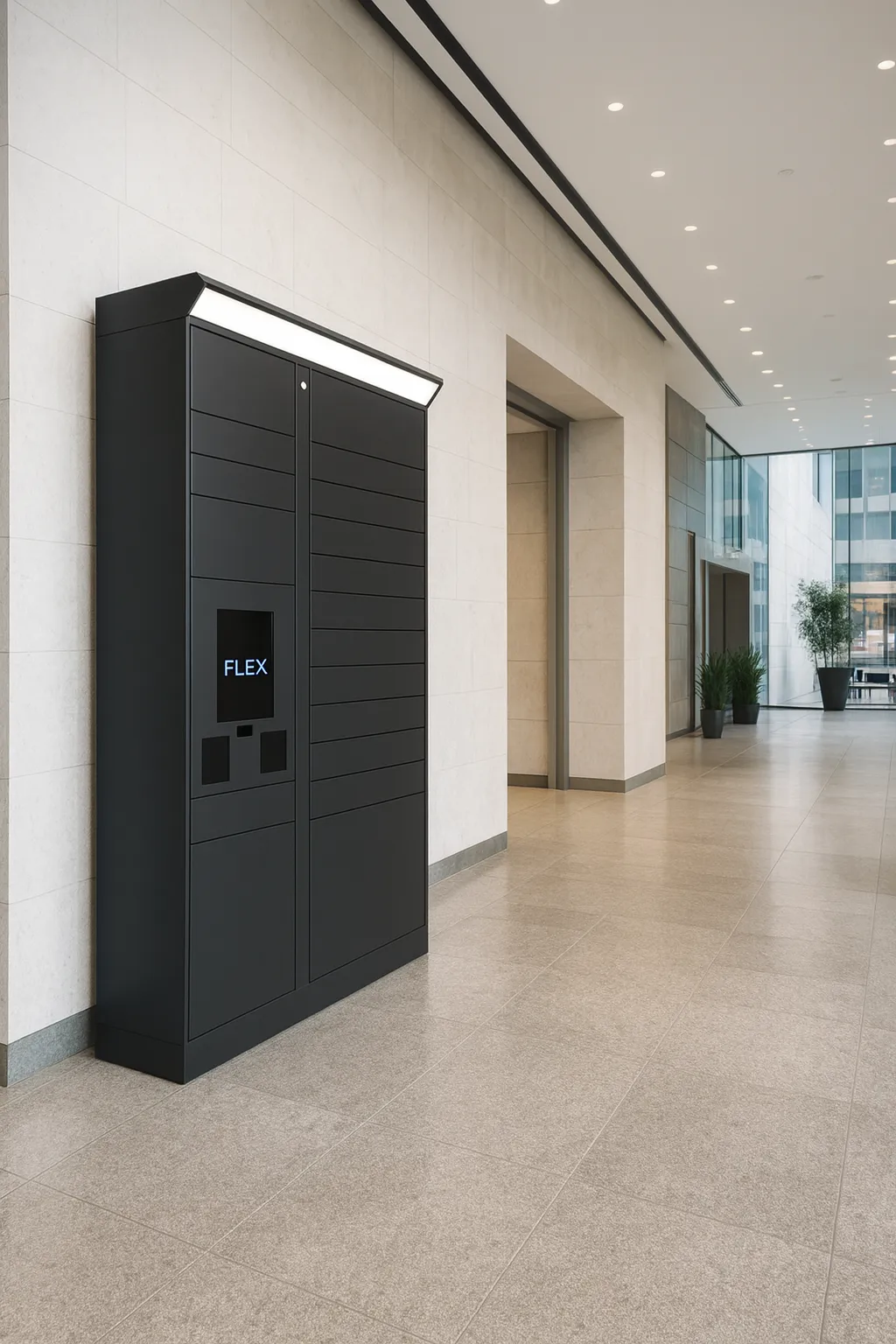
Airports have designed virtually every passenger touchpoint. But Storage remains the blind spot.
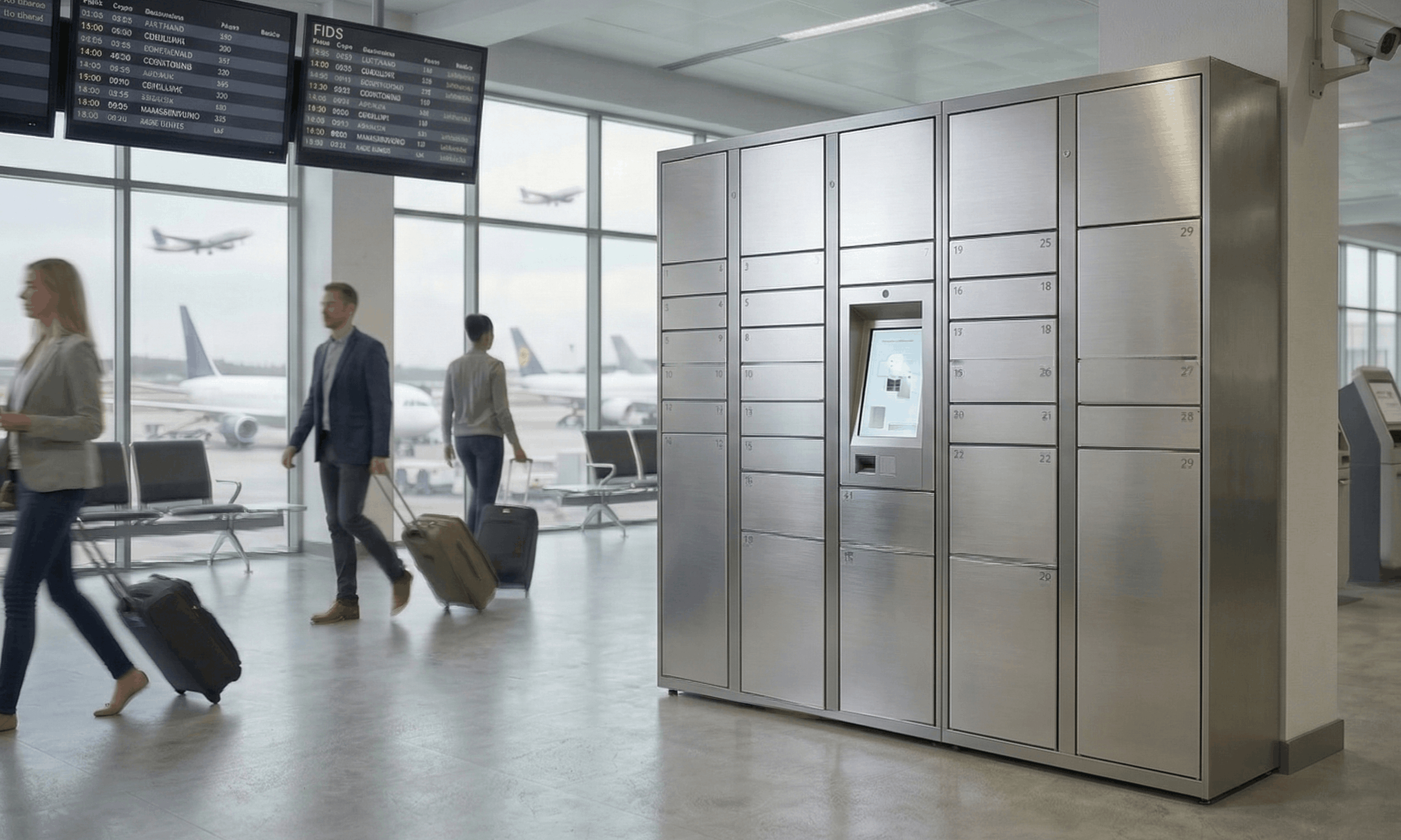
Airports have modernized almost every part of the passenger journey — except one. Storage remains a blind spot that quietly costs airports revenue, creates operational inefficiencies, and leaves an entire category of traveler completely underserved. This piece breaks down why traditional left-luggage solutions no longer cut it, and how smart locker infrastructure changes the equation — for passengers, for staff, and for the airport's bottom line.
Airports Have Solved Luggage Check-In, Boarding, and Security. They Still Haven't Solved Storage.
Passenger experience at airports has transformed in the last decade.
Mobile boarding passes. Biometric gates. Self-check-in kiosks. Contactless everything.
And yet — if a passenger lands at 8am for connecting flight, their next flight isn't until 9pm, and they want to explore the city, their only option is to drag their luggage everywhere.
That gap isn't a minor inconvenience. It's a missed revenue opportunity, a passenger satisfaction problem and an operational liability sitting in plain sight.
Here's what smart storage lockers actually change for airports.
1. The layover passenger is an underserved commercial asset
Airports measure success by dwell time. The longer a passenger stays in the terminal, the more they spend at retail, food, and lounges.
But there's a category of passenger that airports consistently fail to monetize: the connecting traveler or same-day visitor who has hours to spare and nowhere to put their bags.
A passenger dragging two carry-ons doesn't browse. They don't stop for a sit-down meal. They find a seat, park their bags, and wait. Their spend per hour is near zero.
Give that same passenger a smart locker — book via app, drop in 60 seconds, hands free for the next four hours — and you've unlocked a completely different behavior pattern.
→ They walk the terminal instead of anchoring to a seat
→ They enter retail spaces they'd otherwise pass
→ They sit at restaurants without managing luggage under the table
→ Their spend per hour increases materially
The locker doesn't just store bags. It activates commercial space.
2. Staffed left-luggage counters are expensive and inflexible
The traditional model requires staff for every transaction. Open at 6am. Close at 10pm. Queue management. Handwritten tickets. Manual audits at end of shift.
That's a high labor cost for a low-margin service — and it creates bottlenecks at exactly the moments when airports are most congested.
Smart locker banks operate 24/7 with zero staff per transaction. A passenger books online, receives an access code, and completes the entire interaction in under two minutes without involving a single employee.
→ No queue
→ No counter staffing costs
→ No closing time
→ No lost tickets
The staff cost savings alone justify the infrastructure in most airports within the first year of operation.
3. Security compliance is non-negotiable — and smart lockers are built for it
Left luggage in an airport is not a casual operational concern. It's a security matter.
Traditional lockers with coin or key access have no audit trail. No way to know who stored what, when, or whether a compartment has been accessed by more than one person.
Smart lockers provide a full access log on every compartment, every transaction. Integrated with airport security systems, they can trigger alerts for overtime occupancy, flag abandoned items automatically, and allow remote access or lockdown without physical intervention.
That's not a feature upgrade. That's the minimum viable security standard for a post-2001 airport environment — and most airports are still running systems that predate it.
4. Dynamic sizing eliminates the guesswork of locker planning
The hardest part of traditional locker planning is getting the size mix right. Too many small compartments, and passengers with wheelie bags have nowhere to go. Too many large ones, and utilization drops and revenue per square meter collapses.
Smart locker systems with configurable compartments — or modular banks that can be reconfigured as demand patterns shift — remove that guesswork.
→ Adjust sizing allocation based on actual usage data
→ Identify which terminal zones generate the most demand
→ Price larger compartments at a premium during peak periods
→ Expand capacity without full infrastructure replacement
The system learns. Static locker banks don't.
5. Integration with the passenger journey is where the value multiplies
A locker that stands alone is useful. A locker integrated into the airport ecosystem is transformative.
→ Connected to the airport app: passengers book a locker before they land, walk straight to it on arrival
→ Connected to retail loyalty programs: locker use earns points, creates cross-sell opportunities
→ Connected to airline data: delayed flight triggers automatic locker extension notification
→ Connected to ground transport: locker booking bundled with taxi or transit booking at checkout
The storage moment becomes a data point in the passenger's full journey — and a commercial touchpoint rather than a logistical afterthought.
The broader picture:
→ Airports that treat storage as infrastructure — not a legacy service — unlock commercial, operational, and security advantages simultaneously
→ The passenger experience gap between baggage drop and gate has been heavily engineered. The gap between landing and hotel check-in largely hasn't.
→ Smart locker networks don't just solve the storage problem. They change what the airport can offer the passenger who has time but no plan.
The airports that move on this now will set the standard. The ones that wait will retrofit — at higher cost, with less flexibility, into a landscape where passenger expectations have already shifted.
What's the biggest storage or passenger flow challenge at your airport right now? I want to understand where the friction actually lives.