Why Luggage Storage Lockers Are the Fastest-Growing Micro-Investment in Tourism — And How Operators Are Hitting ROI in Under 5 Months
The travel industry is booming. Travelers need somewhere to stash their bags. Smart operators are turning that gap into a high-margin, fast-payback business.
A $1.4 Billion Market That Most Investors Are Ignoring
Every year, hundreds of millions of tourists arrive at their destination hours before check-in or hours after checkout. They stand in train stations, wander through city centers, and skip attractions — all because they're dragging luggage behind them.
The global luggage storage locker market was valued at approximately $1.4 billion in 2024, and depending on the segment tracked, projections place it between $2.3 billion and $4.9 billion by 2033. The smart luggage locker segment alone is growing at a compound annual growth rate (CAGR) of 12.5–15.2%, outpacing most traditional hospitality investments.
Yet the majority of tourism operators, property owners, and micro-investors haven't touched it. That's exactly what makes this window interesting.
Why Luggage Storage Is Growing This Fast
Three structural forces are converging to push this market forward — and none of them are slowing down.
1. Global Tourism Has Fully Recovered and Then Some
International tourist arrivals have surpassed pre-pandemic highs. Cities like Barcelona, Tokyo, Lisbon, and New York are experiencing record visitor volumes, and second-tier destinations — think Porto, Dubrovnik, and Mexico City — are now dealing with the same infrastructure strain that major capitals faced a decade ago.
More tourists means more bags. More bags in more cities means more demand for storage infrastructure that doesn't currently exist at scale.
2. The "Luggage Gap" Is a Real Friction Point
The gap between checkout time and departure time is typically 4–8 hours. During that window, travelers face an uncomfortable choice: pay for another night, leave bags at a front desk (if available), or haul everything through the city.
Most travelers would happily pay $5–$10 to solve this problem. In high-traffic tourist zones, they already do — but supply is nowhere close to meeting demand. Hotels restrict storage to their own guests, traditional left-luggage counters at train stations are overcrowded, and peer-to-peer luggage apps rely on third-party shops that offer inconsistent experiences.
Automated lockers deployed in the right locations eliminate every one of those friction points. No human interaction required, available 24/7, and bookable via QR code or app.
3. Smart Technology Has Collapsed the Operating Costs
Five years ago, deploying a luggage locker operation meant staffing a counter, managing keys, and handling disputes in person. Today, IoT-enabled smart lockers handle everything from booking to payment to access control digitally.
Real-time monitoring, mobile payments, and remote management mean a single operator can oversee dozens of locker units across multiple locations from a laptop. The infrastructure cost per unit has dropped while the revenue per use has stayed constant — a textbook margin expansion.
The Unit Economics: Why ROI Hits in Under 5 Months
Here's where the math gets compelling. Let's walk through a realistic scenario.
Cost Side
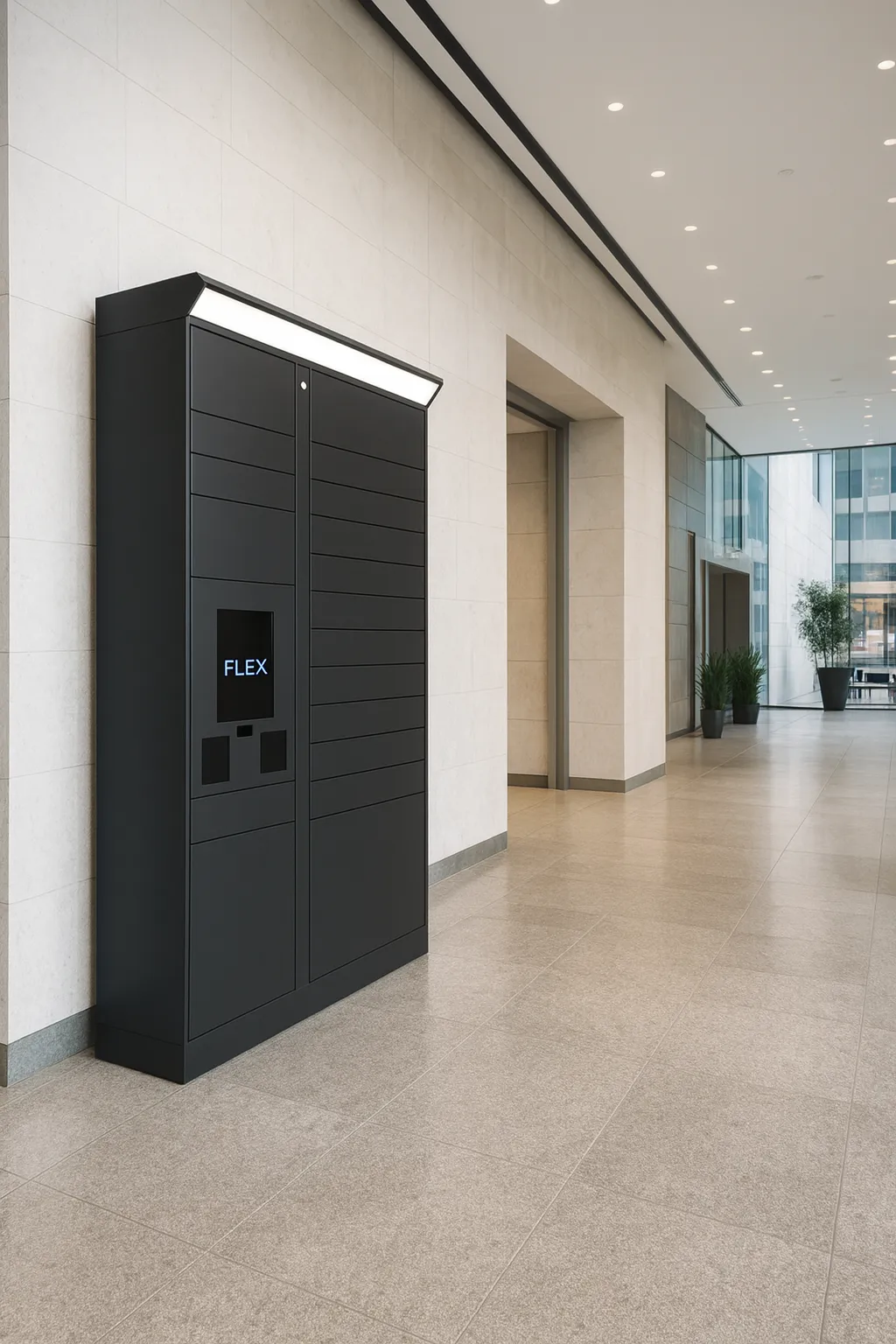
A standard indoor smart locker unit with 12 compartments (a typical mix of 3 XL, 5 Large, and 4 Small cells) runs approximately $7,000–$8,500 fully deployed, including transport and installation. Outdoor-rated units run slightly higher, around $8,500–$10,000, due to weatherproofing.
Add in site rental or revenue-sharing with a host venue (common model), payment processing fees, connectivity costs, and insurance, and your all-in monthly operating expense lands around $300–$500 per unit in a typical European or North American tourist market.
Revenue Side
Pricing follows a simple tier model based on compartment size:
Compartment Size
Daily Rate
Typical Mix per Unit
Small (carry-on, backpack)
$3.50–$5.00 | 4 cells
Large (standard suitcase)
$5.00–$7.00 | 5 cells
XL (oversized luggage)
$7.00–$10.00 | 3 cells
At a conservative 50% average occupancy — meaning half the compartments are rented on any given day — a single 12-cell unit generates approximately $900/month, or roughly $10,800/year. Even at conservative assumptions, operators are recouping their full capital investment in under 5 months. After breakeven, the unit becomes a cash-generating asset with minimal ongoing cost. At 70% occupancy — achievable in peak tourist season — the numbers improve dramatically.
Where to Place Lockers for Maximum Revenue
Location is the single biggest lever. The difference between a 30% occupancy unit and a 70% occupancy unit is almost entirely about placement. Here's what the data shows works best:
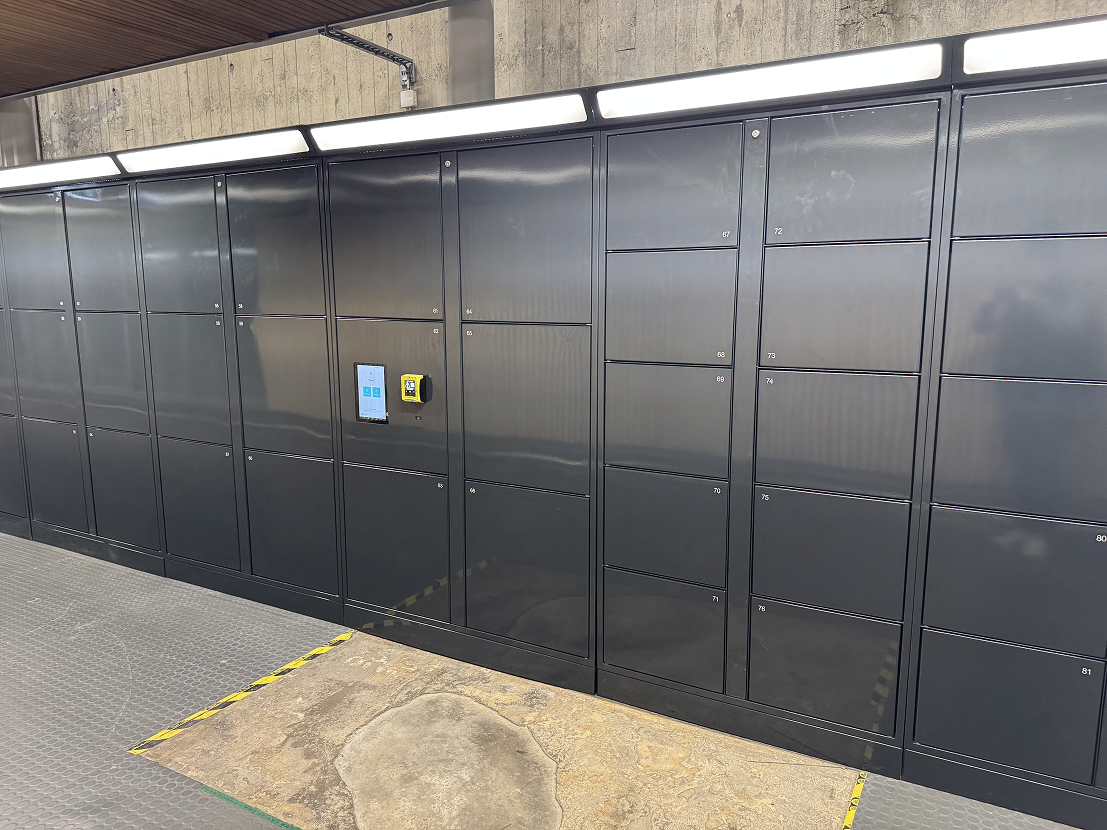
Train stations and transit hubs. Nearly 70% of major airport terminals globally have already integrated automated luggage storage. Train stations and metro areas in tourist cities remain underserved — and that's where the opportunity is densest.
Tourist district storefronts. Cafes, souvenir shops, and hostels near major landmarks generate natural foot traffic from exactly the right customer: a traveler with a bag and time to kill. Revenue-sharing models with host venues (typically 15–25% of gross) create a win-win — the venue gets incremental income, and the operator avoids fixed rent.
Hotels and hostels. Properties that can't offer extended luggage storage to non-guests (or even to their own guests after checkout) benefit from having an automated solution on-premises. This is especially strong in budget and mid-range accommodations where storage services aren't part of the standard offering.
Event venues and cruise terminals. Seasonal or event-driven locations (concert halls, convention centers, port areas) offer high utilization during peak periods. Operators with portable or modular units can rotate inventory to follow demand.
What Makes This Business Model Attractive Beyond the Numbers
Fast payback is only part of the story. Several structural characteristics make luggage storage lockers appealing compared to other tourism micro-investments:
Low labor intensity. Smart lockers are self-service by design. No staff, no scheduling, no customer-facing operations beyond digital support. One operator can manage 20+ units remotely.
Recurring, predictable demand. Tourism has seasonal swings, but the need for luggage storage is embedded in the travel experience itself. As long as people travel with bags, the demand floor stays high.
Scalable without complexity. Adding a second, fifth, or twentieth unit doesn't require new systems, new hires, or new processes. The same dashboard, the same payment infrastructure, the same operational playbook.
Defensible through location. Once you've secured a high-traffic placement and built a relationship with a venue partner, competitors can't simply replicate that position. First-mover advantage in location-based businesses is real and durable.
The Risk Profile Is Manageable
No investment is risk-free, and operators should plan for a few realities. Seasonality matters — winter months in summer-driven destinations will see lower occupancy. Vandalism and maintenance costs exist, though modern smart lockers are designed to be tamper-resistant. Regulatory environments vary by city; some municipalities require permits for street-level installations.
That said, the capital at risk per unit is low ($7,000–$10,000), the payback is fast, and the downside is capped. Compared to opening a restaurant, buying a rental property, or launching a retail concept, the risk-adjusted return profile of luggage storage lockers is remarkably favorable.
The Bottom Line
The luggage storage locker market is growing at double-digit rates. The unit economics work at conservative occupancy assumptions. The technology has matured to the point where a single operator can manage a multi-location portfolio from their phone. And the demand is structural — tied to the fundamental behavior of hundreds of millions of travelers every year.
For investors and operators looking at the tourism infrastructure space, this is one of the few opportunities where you can deploy capital, hit ROI in under five months, and build a scalable, low-overhead business on the back of a trend that isn't going away.
The question isn't whether this market will grow. It's whether you'll be positioned in it when it does.